Timing Chain Replacement Auckland


Hear a rattle for the first few seconds after a cold start? Don’t ignore it.
That short, metallic clatter is one of the most common early signs of a worn timing chain. It often fades once the oil pressure builds, so it’s easy to shrug off. But if you leave it too long, a stretched chain can jump a tooth, and in most modern European engines that means the valves can interfere with the pistons.
At that point, you’re no longer paying for a timing chain replacement. Instead, you’re paying for major engine damage.
We’re Vorsprung Automobil, Auckland’s European car specialists. We diagnose and replace timing chains on Audi, VW, BMW, Mercedes-Benz, Skoda and more, using factory-level tools and the right parts the first time.
Book a Timing Chain Inspection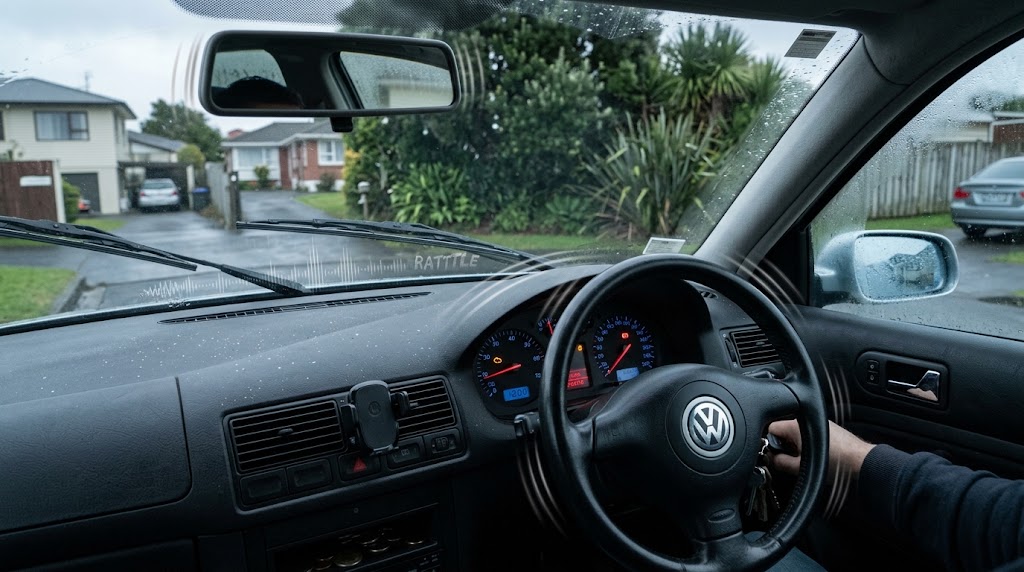
What Does a Timing Chain Actually Do?
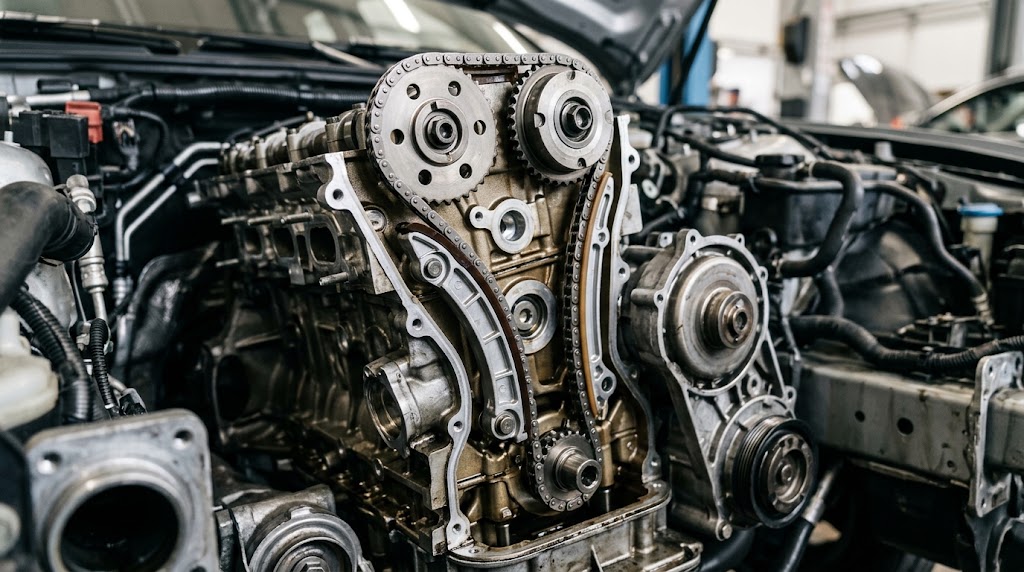
Your engine has two main rotating shafts. The pistons turn the crankshaft. Meanwhile, the camshaft opens and closes the valves.
The timing chain links the two, so each valve opens at exactly the right point as each piston moves up and down. We’re talking fractions of a millimetre and thousandths of a second.
When the chain stretches, that timing drifts. First you lose performance and efficiency. Then you get warning lights. If it goes far enough, the chain skips or snaps, and the valves and pistons collide.
In addition, most European engines are “interference” engines. That’s the technical way of saying there’s no safe margin if the timing goes wrong.
Contact Us For a Free QuoteSigns Your Timing Chain Needs Replacing
Watch (and listen) for these:
- Rattling noises on cold start. Usually lasts 2 to 5 seconds and comes from the front or side of the engine. This often points to a worn tensioner that can’t keep the chain tight until oil pressure builds up.
- Engine warning light. On VW and Audi, fault codes like P0016, P0017, P0008 or P0009 are classic signs of cam and crank timing falling out of sync.
- Rough idle or misfires. For example, the engine may shake at the lights or feel lumpy at low revs.
- Loss of power or poor fuel economy. When the cam timing slips out of position, the engine has to work harder for the same result.
- Hard starting. In other words, the engine cranks for longer before it fires.
- Metal particles in the oil. In fact, we sometimes spot this during a routine service, before any other symptoms show up.
If you notice any of these, book in sooner rather than later. A stretched but still intact chain is a straightforward repair. However, a chain that’s already jumped is a costly repair.
European Engines We See Most Often
Since we’ve spent over fifteen years on the tools, we know which engines are prone to timing chain problems, and why:
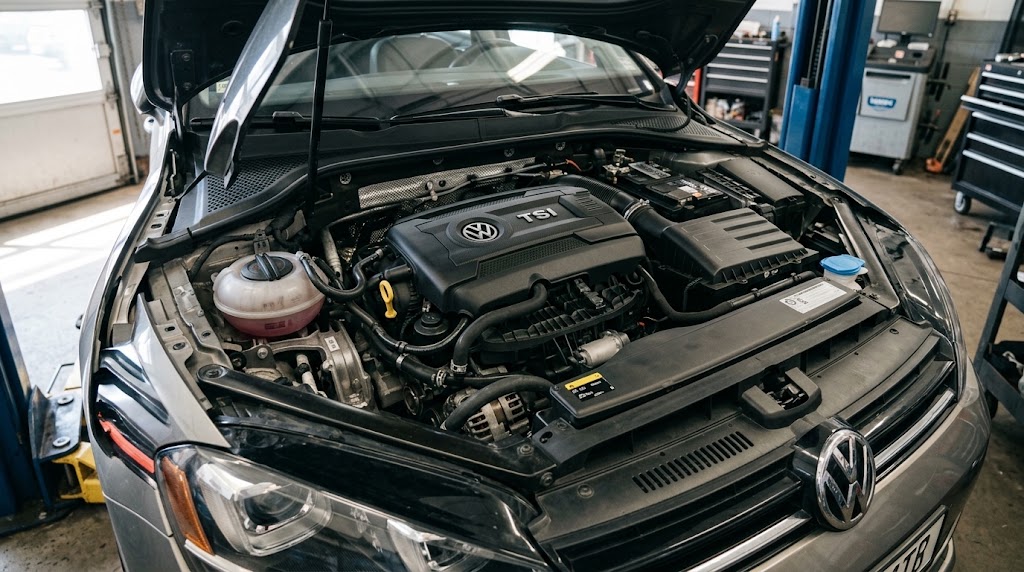
- VW and Audi 1.4 TSI and 1.2 TSI (EA111): Known for chain stretch and weak tensioners, particularly on earlier models.
- VW and Audi 2.0 TFSI / 1.8 TFSI (EA888 Gen 1 and Gen 2): The original tensioner design could fail without warning. We fit the updated tensioner as standard.
- BMW N47 and N20: The N47 diesel has its chain at the rear of the engine,
against the gearbox. The N20 petrol is known for timing chain guide failure. - Mercedes-Benz M271 and M272: Chain stretch and related camshaft sprocket wear.
Not sure what engine is in your car? Give us your rego, and we’ll check the model and engine code for you.
Timing Chain vs Timing Belt (Cambelt): What’s the Difference?
Both do the same job. However, they’re built differently.
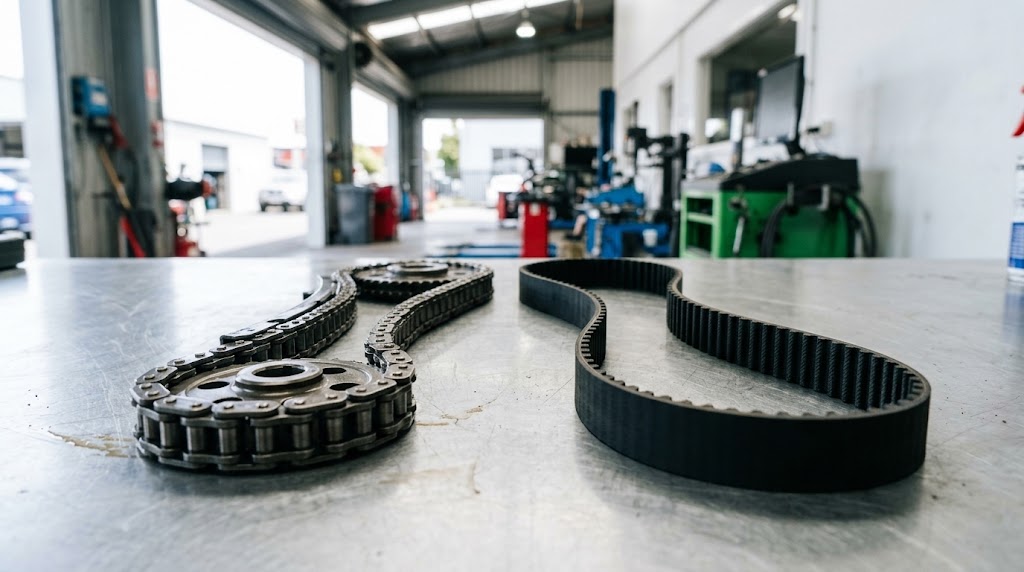
A timing belt, or cambelt, is a reinforced rubber belt. It has a set replacement interval, usually by kilometres or years, whichever comes first. Many petrol VWs, diesel Audis and older Toyota models run a cambelt.
A timing chain is metal and runs in engine oil. Because of this, it’s designed to last much longer, often the life of the engine. In practice, poor oil maintenance, long service intervals, and known design weaknesses mean that many chains wear out well before then.
We handle both. On many belt-driven engines, the cambelt also drives the water pump, so we recommend replacing the water pump and tensioner at the same time. As a result, you avoid paying for the same labour twice.
How We Replace Your Timing Chain
Here’s exactly what happens when your car comes to us:
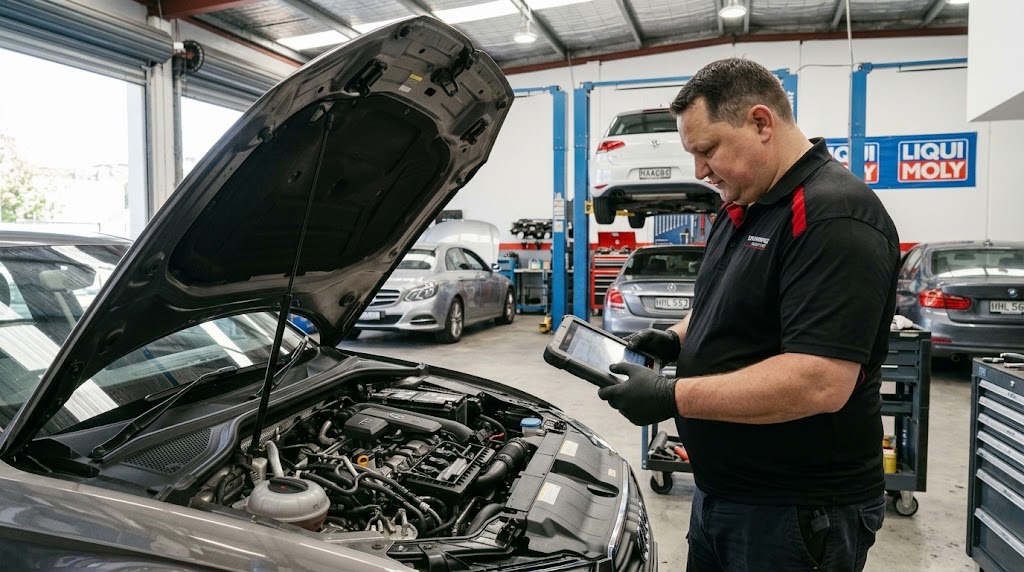
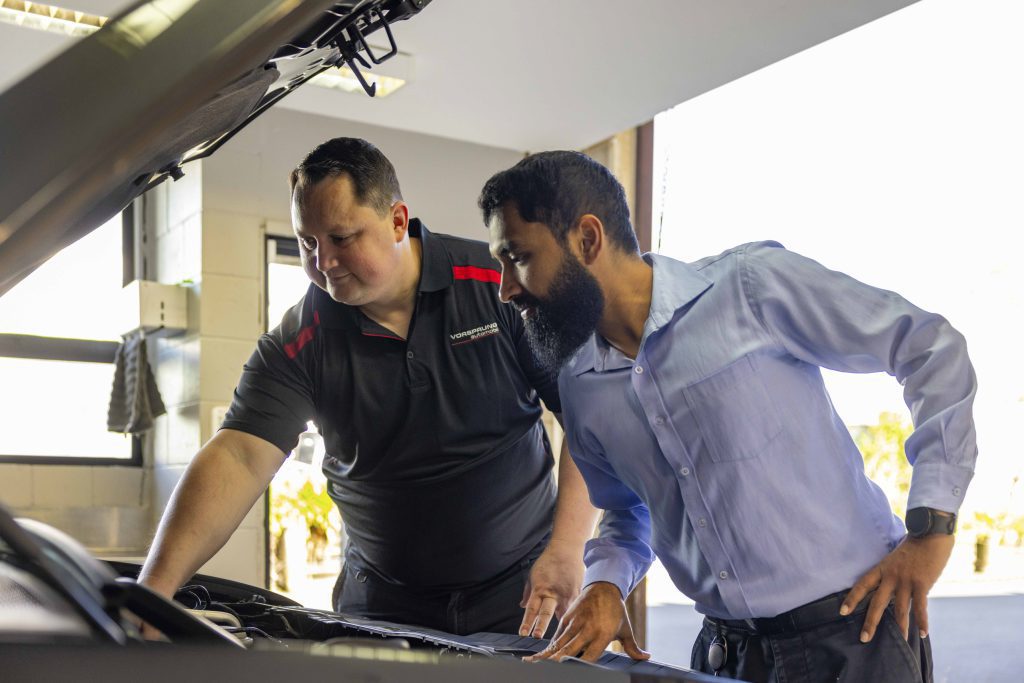
- Diagnosis first. First, we connect dealer-level diagnostic software (ODIS for VW and Audi, ISTA for BMW) and read live camshaft-to-crankshaft deviation data. Consequently, this tells us how far the chain has actually stretched, rather than guessing.
- Clear, upfront quote. In short, you’ll know the cost before we touch a spanner. No surprises.
- Engine locked in position. Then we use the correct timing tools to hold the camshaft and crankshaft exactly in place. Above all, this is the crucial step where a general garage can get it wrong.
- Full kit replacement. Chain, tensioner, guides, and sprockets or gears where needed. After all, replacing only the chain on a worn tensioner is a false economy.
- New bolts and seals. Many European engines use single-use stretch bolts. Therefore, we always fit new ones.
- Fresh oil and filter. Using the manufacturer-approved specification for your engine.
- Adaptations reset and road test. Finally, we reset the engine’s timing adaptations, clear codes, and confirm everything reads correctly before you get your car back.
Timing Chain Replacement Cost in Auckland
The honest answer: it depends on your engine.
On some cars, the chain sits at the front and is relatively accessible. However, on others, like the BMW N47, you have to remove the engine to reach it. Consequently, there’s a big difference in labour.
What affects your replacement cost:
- Engine layout: front-mounted or rear-mounted chain
- Parts quality: genuine or OE-equivalent kits from suppliers such as INA, iwis or Febi
- Extra components: tensioners, guides, oil pump chains, or a water pump on cambelt engines
- Existing damage: a chain that’s already jumped may have bent valves
As a guide, the timing chain jobs on common European engines typically range from $1800 – $3000. In comparison, timing belt replacement is usually cheaper, starting at $1000. In any case, call us with your rego for an exact quote.

Why Auckland Drivers Choose Vorsprung Automobil
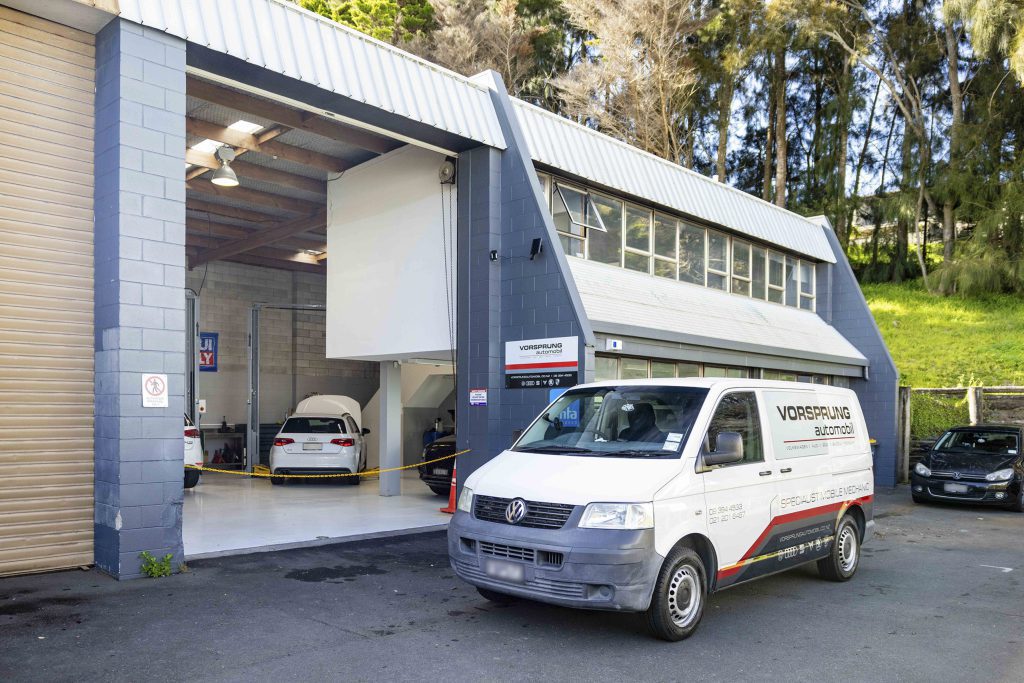
We look after European cars across Auckland’s North Shore, including Albany, Takapuna, Glenfield and Campbells Bay.
- European specialists. We work on Audi, VW, BMW and other European cars every day. Not occasionally.
- 15+ years of hands-on experience. As a result, we’ve seen the common failures, and we know the updated parts that fix them.
- Dealer-level diagnostics without dealer-level pricing.
- Quality parts backed by our workmanship warranty of 12 months or 15,000 km
- Straight talk. We’ll show you what we found and explain it in plain English.
- Payment Option: Engine repairs are rarely planned. We offer Afterpay so you can get your car fixed now and spread the cost.
Frequently Asked Questions
Many manufacturers design timing chains to last the engine’s life. In reality, some European engines need replacement between 100,000 and 200,000 km, especially if oil changes have been delayed.
It’s not worth the risk. This is because a rattle means the tensioner or chain is already worn. If the chain jumps or snaps, you’re likely facing major engine damage that costs far more than the repair itself.
Most jobs take 1 to 3 days, depending on the engine. On the other hand, rear-mounted chains take longer because the engine has to come out. We’ll also give you a clear timeframe with your quote.
No. A cambelt has a fixed service interval. Instead, replace a timing chain when it shows signs of wear, as indicated by diagnostic data and physical inspection.
If your water pump is driven by the cambelt, yes. It’s a common failure point, and replacing both at once saves you paying for the same labour twice.
Change your oil more often than the long-life intervals suggest. Specifically, we recommend changing the oil every 10,000 to 15,000 km, using the correct oil specification for your engine. Clean oil keeps the tensioner working properly and, as a result, slows chain wear.
Book Your Timing Chain Inspection Today
A quick check now could save you thousands later.
Contact us today and tell us what you’re hearing, and we’ll take it from there.
Book Your Timing Chain Inspection