
Your dashboard lights up. The local garage clears the code, but it’s back within a week. European cars are engineered differently, and treating them like standard cars leads to costly repairs. Here’s exactly why specialist servicing matters — and how it actually saves you money.
European Cars Are Built to a Different Standard
There’s a reason a BMW, Audi or Mercedes feels different to drive. These vehicles are designed around precision handling, advanced technology and tight engineering tolerances that mainstream cars simply aren’t held to.
That same engineering is what makes them rewarding to own — and unforgiving when serviced incorrectly. A general mechanic might keep the car running, but “running” and “running the way it was designed to” are two very different things.
Complex electronic systems run almost everything.
Modern European vehicles rely on complex electronic systems that constantly communicate with each other. Your engine, gearbox, suspension and even your brake pad sensors are all monitored and managed by software.
When something goes wrong, a generic code reader often only sees the symptom, not the cause. A faulty turbo, a failing timing chain, or a recurring warning light can all trigger the same dashboard alert — and guessing gets expensive fast.
Tighter manufacturer standards leave no room for shortcuts.
European systems are far less forgiving about the details:
- Specific oil grades — using the wrong viscosity can damage the engine over time.
- Fuel injection timing — calibrated precisely for performance and fuel efficiency
- Correct torque, parts and tolerances — built to meet manufacturer standards, not “close enough”
Skip these, and you don’t always notice straight away. You notice six months later, in the form of rough shifting, strange noises, or an expensive repair bill.
What a General Mechanic Often Misses
A good general mechanic can handle plenty. But properly servicing European vehicles usually comes down to two things they often lack: the right tools and the right data.
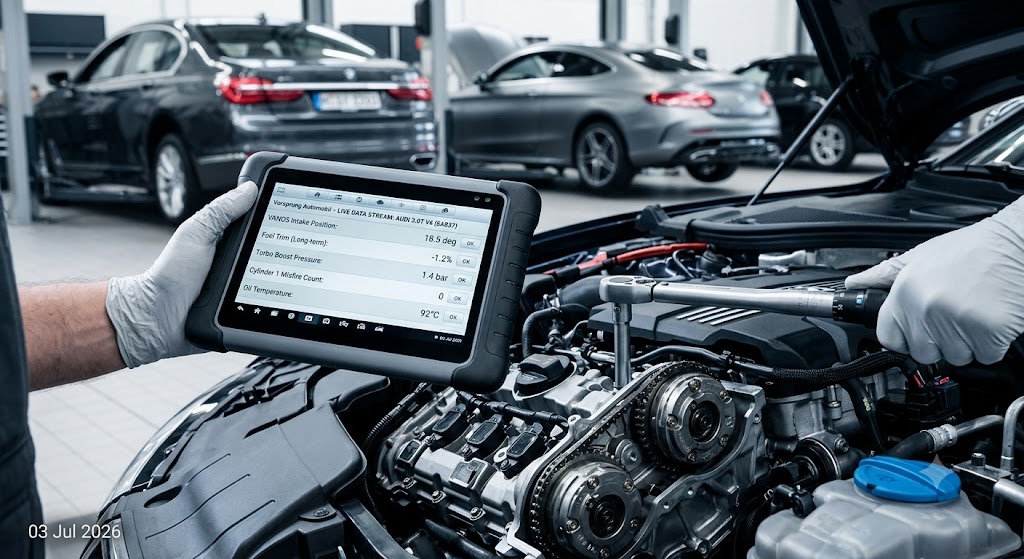
Specialists use factory-level tools that read live data directly from the car’s modules. Instead of clearing a code and hoping, they can see exactly what the electrical systems are reporting in real time — and pinpoint the actual fault.
This is where most repeat problems come from. The “same problem” keeps coming back, not because the car is unreliable, but because it was never diagnosed correctly in the first place.
Common European Car Issues That Need Specialist Attention
If you own a European car long enough, a few familiar issues tend to show up. These are the ones where specialist servicing makes the biggest difference:
- Warning and dashboard lights that return after being cleared
- Rough gear changes or shifting in automatic and dual-clutch boxes
- Electrical repairs — from sensors to control modules
- Suspension components that affect ride quality and handling
- Turbo and timing chain issues that get costly if left too long
None of these is a “just live with it” problem. Caught early and diagnosed properly, most are routine. Left to a guess-and-replace approach, they quietly turn into your most expensive repairs.
How Regular Specialist Servicing Protects Your Investment
A European car is a long-term investment, and how it’s serviced directly affects its value and running costs.
Servicing your car regularly with a specialist gives you:
- A complete service history — essential for resale value and buyer confidence
- Protected warranty — work done to manufacturer standards keeps the cover intact.
- Better fuel efficiency and performance — the car runs the way it was engineered to
- Fewer surprises — small issues get caught before they become big ones
In other words, regular maintenance isn’t the expensive option. The skipped service that turns into a major fault is.
💡 Expert Tip: Don’t Wait for a Light to Come On
The most common mistake European car owners make is treating the dashboard as their early-warning system. By the time a warning light appears, the issue has often been developing for a while.
Many faults — a slowly failing timing chain, a turbo on its way out, worn brake pad sensors — leave traces in the car’s live data long before they trigger a light. A proper specialist service reads that data at every visit, which is how problems get caught while they’re still cheap to fix.
Conclusion & Next Steps
European cars reward proper care and punish shortcuts, so the real cost isn’t specialist servicing — it’s the repairs that follow when it’s skipped. Getting your BMW, Audi, Mercedes, or Volkswagen serviced by people with the right tools and expertise keeps it reliable, helps it hold its value, and saves you money over the life of the car.
If your car is due for a service — or that warning light just won’t quit — book a specialist service with Vorsprung Automobil and have it properly diagnosed the first time.
